
Contents
Steel Toe vs Composite Toe Safety Shoes
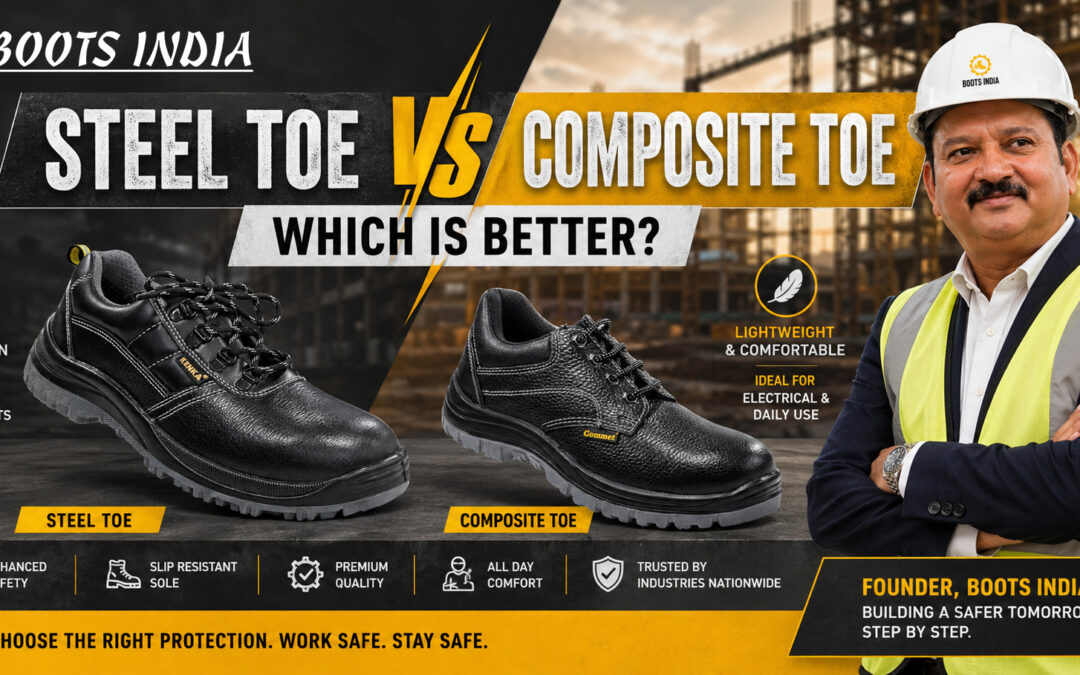
Steel toe vs composite toe safety shoes is one of the most common comparisons when choosing the right footwear for industrial work. Understanding steel toe vs composite toe is essential because the wrong choice can affect safety, comfort, and long-term performance.
In this guide, we break down steel toe vs composite toe in a practical way so you can decide which is better for your specific work environment.
🛡️ What is Steel Toe vs Composite Toe?
When comparing , the main difference lies in the material used for toe protection.
🔩 Steel Toe Safety Shoes
Steel toe shoes use a metal cap (steel) to protect against heavy impacts and compression.
🧪 Composite Toe Safety Shoes
Composite toe shoes use non-metal materials like fiberglass, carbon fiber, or plastic.
This comparison is not about which is universally better—it’s about which is better for your job.
Key Differences
1. Protection Level
In this comparison, steel toe offers:
- Higher resistance to heavy impact
- Stronger protection in extreme conditions
Composite toe:
- Meets safety standards
- Slightly less rigid than steel
Winner: Steel toe (for heavy-duty environments)
2. Weight and Comfort
A major factor is comfort.
- Steel toe → Heavier
- Composite toe → Lightweight
For workers wearing shoes 8–10 hours daily,they often leans toward composite for comfort.
Winner: Composite toe
3. Electrical Safety
Another important aspect of steel toe vs composite toe:
- Steel toe → Conducts electricity
- Composite toe → Non-conductive
Winner: Composite toe (for electricians)
4. Temperature Conditions
In extreme environments, steel toe vs composite toe behaves differently:
- Steel toe → Conducts heat and cold
- Composite toe → Insulates better
Winner: Composite toe
5. Durability
When analyzing steel toe vs composite toe:
- Steel toe → Extremely durable and long-lasting
- Composite toe → Durable but may wear faster under heavy impact
Winner: Steel toe
When to Choose Steel Toe vs Composite Toe
Choose Steel Toe If:
- You work in construction or heavy industries
- There is risk of heavy falling objects
- Maximum protection is required
Choose Composite Toe If:
- You work in electrical environments
- You need lightweight footwear
- Comfort is a priority for long shifts
Understanding steel toe vs composite toe in real working conditions helps you make the right decision.
Common Mistakes in Selection
Many people misunderstand steel toe vs composite toe and make these mistakes:
- Choosing based only on price
- Ignoring work environment
- Not considering comfort
- Using steel toe in electrical settings
Avoiding these mistakes ensures better safety outcomes.
Quick Comparison
| Feature | Steel Toe | Composite Toe |
|---|---|---|
| Protection | Very High | High |
| Weight | Heavy | Lightweight |
| Electrical Safety | No | Yes |
| Temperature Control | Poor | Good |
| Comfort | Moderate | High |
| Durability | Very High | High |
Conclusion
The debate of which is better does not have a one-size-fits-all answer.
- If your priority is maximum protection and durability, steel toe is the better choice.
- If your priority is comfort, lightweight design, and electrical safety, composite toe is the better option.
Ultimately, choosing between steel toe vs composite toe depends on your work environment, daily usage, and safety requirements.
Get in Touch
Still unsure about steel toe vs composite toe for your workforce?
We help businesses choose the right safety footwear based on real industrial needs.
Contact us today for expert guidance and bulk safety shoe solutions.
Reach out to us in LinkedIn for more solutions
Your safety starts from the ground up.